Best Marathons in Asia 2026: Fast, Scenic, and Destination Races
There is no single best marathon in Asia.
There is the best marathon for a personal best. The best marathon for a once-in-a-lifetime trip. The best marathon for crowd energy. The best marathon for a first marathon. The best marathon if you want cool weather, a flat course, and predictable logistics. The best marathon if you want a race that feels nothing like your normal Sunday long run.
That distinction matters because most marathon lists are not very useful for actual runners.
They usually do one of two things. They either list every marathon in a region, which is comprehensive but overwhelming, or they rank races by travel appeal, which is fun but not always helpful if your goal is to run well.
A runner choosing a marathon needs something more practical.
You need to know what kind of race you are choosing, what the course and climate are likely to demand, how much travel stress you are adding, and when you need to start training.
Asia has races for almost every kind of runner. The mistake is choosing the most famous one when you really needed the most suitable one.
How to choose the best marathon in Asia
Start with the goal, not the destination.
If your goal is a personal best, you should care about course profile, weather, start time, field depth, pacing, and logistics. A beautiful race with heat, humidity, hills, and jet lag may be memorable, but it may not be the best place to run your fastest marathon.
If your goal is a destination experience, the calculation changes. Scenery, culture, travel timing, and the overall trip may matter more than shaving minutes from your finish time.
If it is your first marathon, you probably want a race with reliable organisation, clear course support, manageable weather, and enough crowd energy to make the final 10K feel less lonely.
If you are an experienced marathoner, you might be looking for something more specific: a World Marathon Major, a fast city race, a unique route, or a race that fits a training block around work and travel.
The best marathon is the one whose demands match your actual goal.
Best fast marathons in Asia
Fast marathons usually share a few traits: relatively flat roads, cool or moderate weather, good organisation, enough runners around your pace, and limited course chaos.
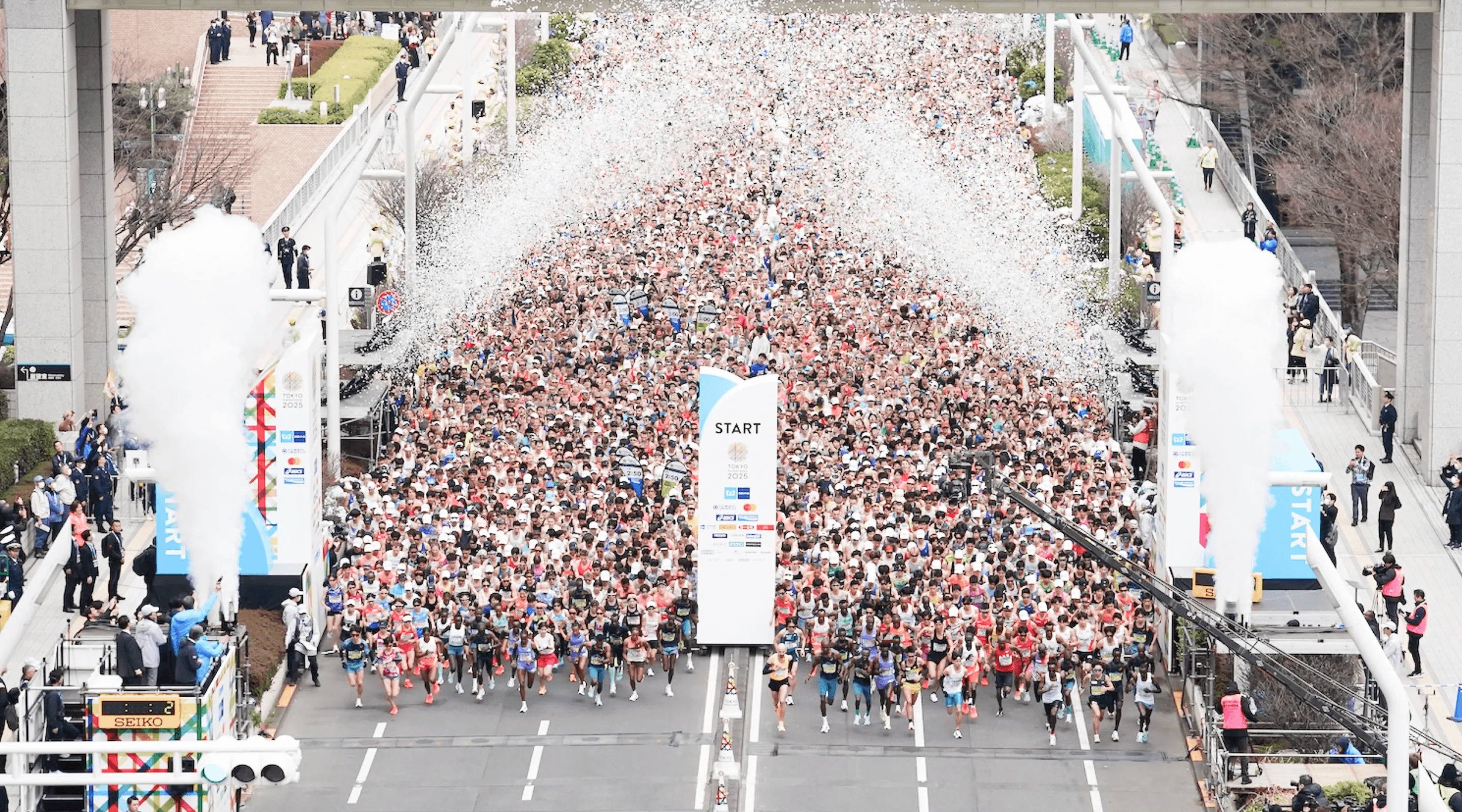
Tokyo Marathon
Tokyo is the obvious starting point.
It is one of the Abbott World Marathon Majors, which gives it prestige, scale, and international demand. For many runners, that alone makes it the dream Asian marathon. But it is not just famous. It is also a serious performance race: a large city marathon with elite depth, strong organisation, and the kind of atmosphere that can pull runners through difficult sections.
The tradeoff is access. Major status means high demand, lottery pressure, travel planning, and a race experience that is not casual. If Tokyo is the goal, the training block should be treated like a major project, not a last-minute trip.
Best for: runners who want a major-marathon experience, strong organisation, and a big-city performance setting.
Osaka Marathon
Osaka is another strong choice for runners who want a large Japanese city marathon experience without the exact same mythology as Tokyo.
It has the scale and urban feel that many marathoners want: crowds, city streets, and a sense of occasion. For runners travelling to Japan, Osaka can also be a compelling destination in its own right.
Best for: runners who want a major Japanese city race, strong atmosphere, and a destination marathon that still feels performance-oriented.
Seoul Marathon
Seoul is often part of the conversation for runners looking at fast Asian city marathons. It has a major-city setting, a deep running culture, and the practical appeal of racing in a large, well-connected city.
For performance-focused runners, Seoul can make sense because it combines destination appeal with a serious road-racing environment. As with any city marathon, the details matter: check the current course, start conditions, and recent weather patterns before choosing it as a PB attempt.
Best for: runners who want a serious city marathon in a major Asian capital.
Best scenic and destination marathons
Not every marathon should be chosen for speed.
Some races are worth considering because the route, setting, or trip is the point. That does not make them easy. In fact, destination races can be harder to race well because travel, climate, terrain, and unfamiliar food/sleep routines all add stress.
Great Wall Marathon
The Great Wall Marathon is one of the most distinctive race concepts in Asia. It is not the race you choose for a conventional PB. The appeal is the setting and the challenge.
Stairs, climbs, and the physical oddity of the route change the meaning of "marathon pace." A runner who chooses it should train for time on feet, climbing, descending, and resilience rather than expecting a normal flat-road marathon experience.
Best for: runners who want a hard, memorable destination race more than a fast finish time.
Angkor-area races in Cambodia
Races around Angkor are popular because the setting is unusually memorable. They are often discussed as destination events rather than pure performance races, and that is the right frame.
Heat, humidity, travel, and early starts can all matter. The reward is a race experience that feels tied to place rather than just distance.
Best for: runners who want scenery, travel, and a distinctive race atmosphere.
Bali and Southeast Asian destination races
Bali and other Southeast Asian destination races can be attractive for runners who want to combine a marathon with travel. The key variable is climate.
Warm and humid conditions change the race. They affect pacing, hydration, recovery, and the margin for error. A runner coming from a cooler climate should not simply copy their normal marathon plan.
Best for: runners who value the trip and are prepared to adjust expectations for heat and humidity.
Best beginner-friendly Asian marathons
A beginner-friendly marathon is not necessarily the easiest marathon. It is the one with fewer avoidable complications.
For a first marathon, look for:
reliable race organisation
clear aid stations
manageable weather
a course that is not brutally hilly
enough runners and spectators to avoid feeling isolated
simple logistics for getting to the start
a destination that will not exhaust you before race day
This is why large city races can be good first marathons even when they are crowded. The scale can be annoying, but it also means support, structure, and energy.
Tokyo, Osaka, Seoul, Singapore, and other major city races can make sense for first-time marathoners if the entry, travel, and climate are manageable. But the best beginner choice depends on where you live and how much travel stress you are willing to add.
If it is your first marathon, do not choose the race only because the Instagram version looks good.
Choose the race that gives your training the best chance to show up.
Best major-city race atmospheres
Some runners want the marathon to feel big.
They want crowds, city landmarks, a deep field, expo energy, and the feeling that the whole city knows the race is happening. In Asia, the strongest candidates are usually the major city races: Tokyo, Osaka, Seoul, Singapore, Taipei, Shanghai, and similar large urban marathons.
A big-city marathon can help late in the race. Crowd energy does not remove fatigue, but it can change how fatigue feels. Running through a quiet industrial section at 35K is different from running through a city that is still giving you feedback.
The downside is complexity. Big races mean crowded starts, logistics, corrals, bag drops, and sometimes more time on your feet before the gun. If you are travelling internationally, that complexity increases.
The best strategy is to plan the logistics as part of training. Know the start process. Know breakfast timing. Know transport. Know what you will do if you are standing around longer than expected.
Marathons are already hard. Do not make race morning harder through avoidable uncertainty.
How climate and travel affect training
The race is not just 42.2 kilometres. It is 42.2 kilometres in a context.
Asia is too large and varied for simple weather rules. A cool Japanese city marathon is a different problem from a humid Southeast Asian race. A high-energy urban course is different from a scenic route with climbs. A race close to home is different from one reached after long-haul travel.
Training should reflect that.
If the race is likely to be warm or humid
You need a heat plan.
That may mean adjusting goal pace, practicing hydration, learning how your body responds to humidity, and doing some heat-acclimation work if appropriate. Heat does not just make the race uncomfortable. It changes the physiology of the effort.
A pace that is realistic in cool weather can become too aggressive in humidity.
If the race involves travel
Travel stress is training stress.
Jet lag, long flights, disrupted sleep, unfamiliar food, and extra walking can all affect race day. Build the final week around reducing friction. Arrive early enough if possible. Keep the expo visit short. Do not turn the day before the marathon into a sightseeing endurance event.
If the course is hilly or unusual
Train for the course you chose.
A flat-road marathon plan is not automatically wrong, but it may be incomplete. Hills require strength and pacing discipline. Descents require durability. Stairs and unusual terrain require even more specificity.
This is especially true for destination races where the experience is the challenge.
When to start training for an Asia marathon
Most runners should think in terms of a 16- to 24-week build, depending on current fitness, marathon experience, and how ambitious the goal is.
That does not mean you start from zero 16 weeks out. The better approach is to arrive at the start of the marathon block with a base already in place.
A practical timeline looks like this:
24+ weeks out: choose the race, check travel/logistics, build consistent weekly running
20 weeks out: begin shaping the goal and long-run progression
16 weeks out: enter the focused marathon build
8-10 weeks out: lock in race-specific work, fueling practice, and course/climate adjustments
3 weeks out: taper begins for many runners, depending on plan and history
Race week: protect sleep, reduce logistics stress, and keep the goal honest
If the race involves heat, hills, altitude, or long-haul travel, start planning earlier.
The more complex the race, the less you should rely on last-minute fixes.
How to match the race to the runner
Here is the simplest way to choose.
If you want a fast time, choose the race that removes variables: cooler weather, flatter course, reliable support, less travel stress, and enough runners around your pace.
If you want a memorable trip, choose the race that makes the destination part of the experience, then adjust your expectations.
If you want your first marathon, choose the race that will support you when the final 10K gets difficult.
If you want a major achievement, choose the race that still excites you when you imagine the training block, not just the finish photo.
That last point matters. A marathon is not only a race-day decision. It is a training-life decision. The best marathon for you is the one you can train for properly.
The kaizen takeaway
A good race choice makes the training clearer.
Once you know whether you are chasing a PB, a destination experience, a first finish, or a major-city atmosphere, the plan can become more specific. The weekly load, long-run progression, workout intensity, travel preparation, and taper all change depending on the race you choose.
That is how kaizen thinks about marathon preparation.
The app is not built around generic motivation. It is built around the practical question behind every marathon goal: what training load are you ready to absorb, and what next week moves you toward the race you actually chose?
Asia has plenty of marathons worth running.
The right one is not the race that looks best on a list.
It is the race that matches your goal, your body, your calendar, and the training you can actually do.


