
running track

How kaizen works

kaizen builds your training from the running you’ve already done, then keeps adapting it to the running you actually do, helping you stay consistent

A different kind of training app

A different kind of training app

Most training apps start with a fixed plan and expect you to follow it.

kaizen works the other way around. It starts with your running history to set the plan, and then updates based on the training you actually do. No guesswork.

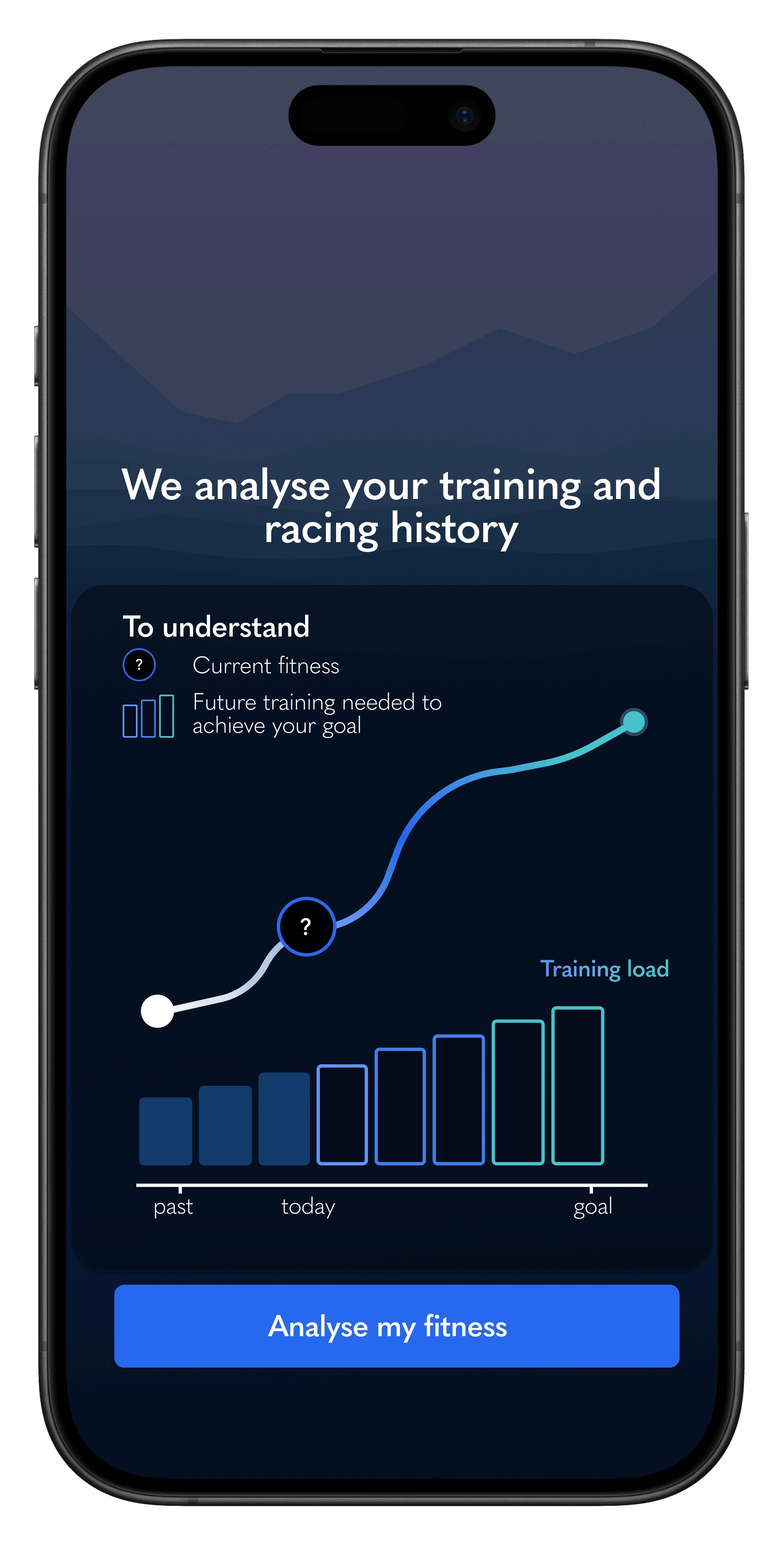
Starting with the running you’ve actually done

kaizen doesn't obsess over one workout or one recent result. It looks at the bigger picture of your training to know your current fitness. This is the starting point for your plan.
About us metrics graph

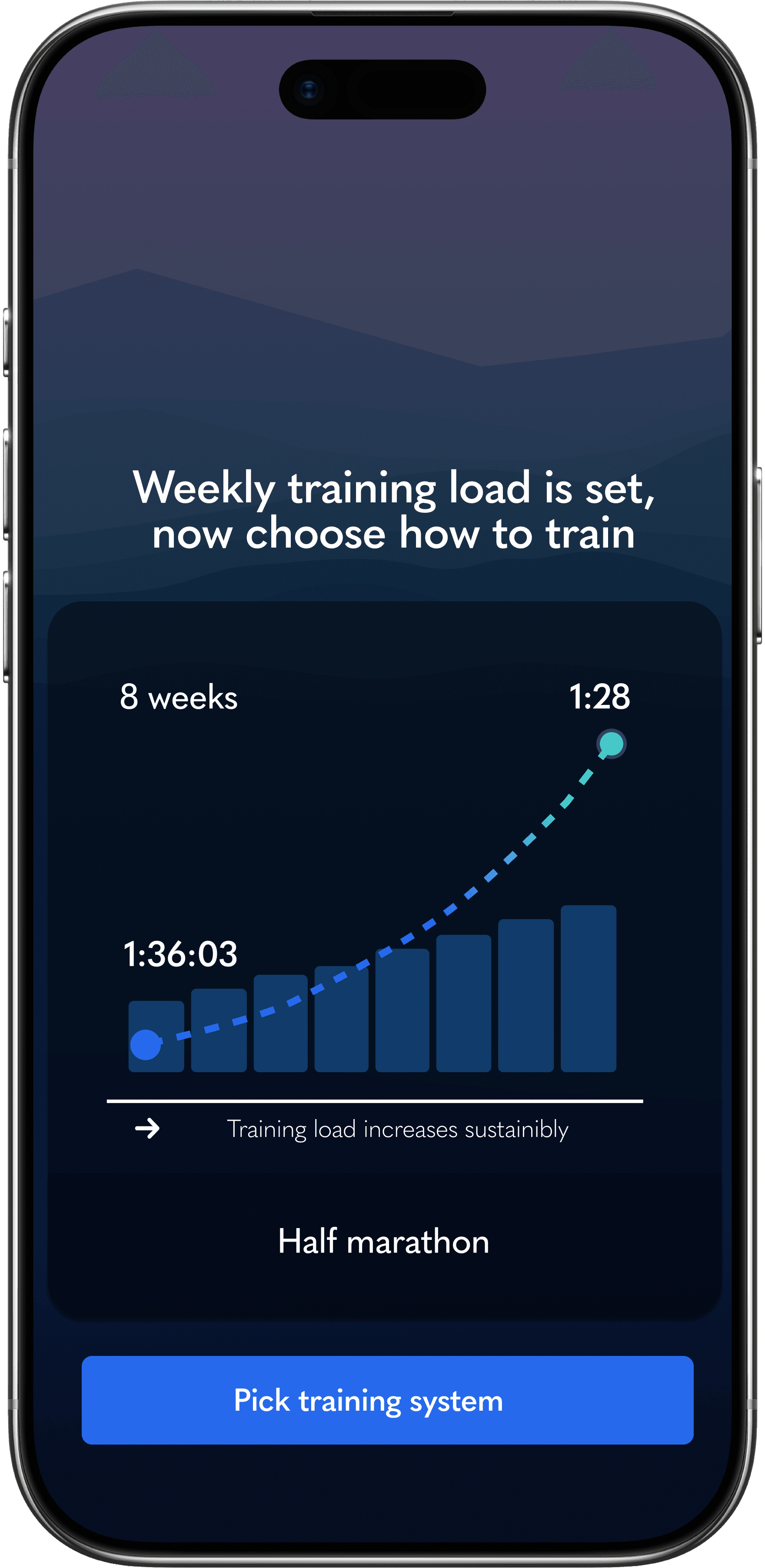
Always calculating the training load you need to achieve your goal

kaizen sets out the training load you need to accumulate to achieve your goal and sets the path to get there.

That matters because improvement is not defined by one session, one split, or one heroic week. It is shaped by the work you can absorb over a longer period of time.

Load gets translated into practical weekly guidance

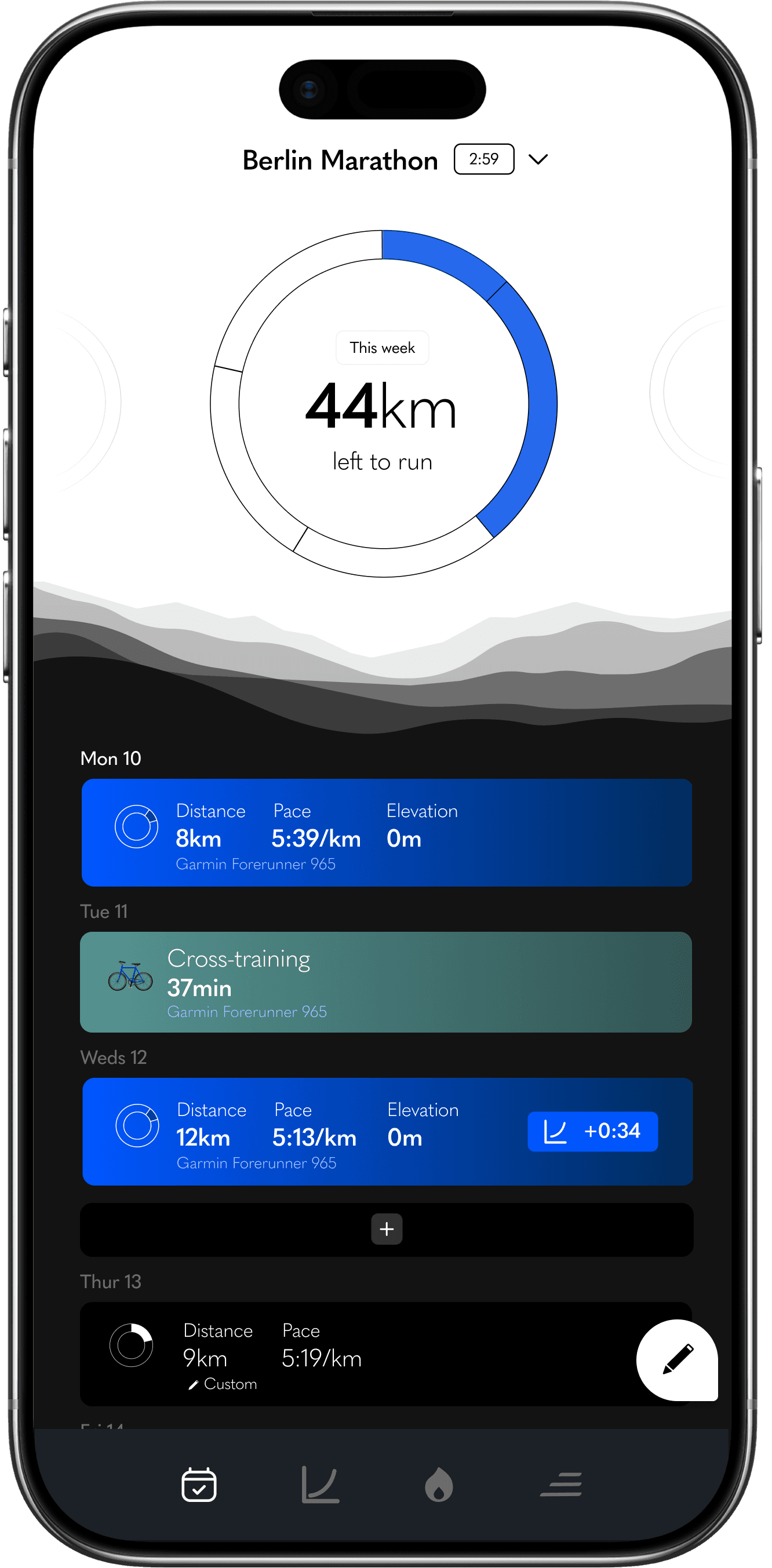
kaizen first works out a training load target for the week (in the shape of a 🍩), then translates that into a weekly distance target based on how your training is expected to look.
About us metrics graph

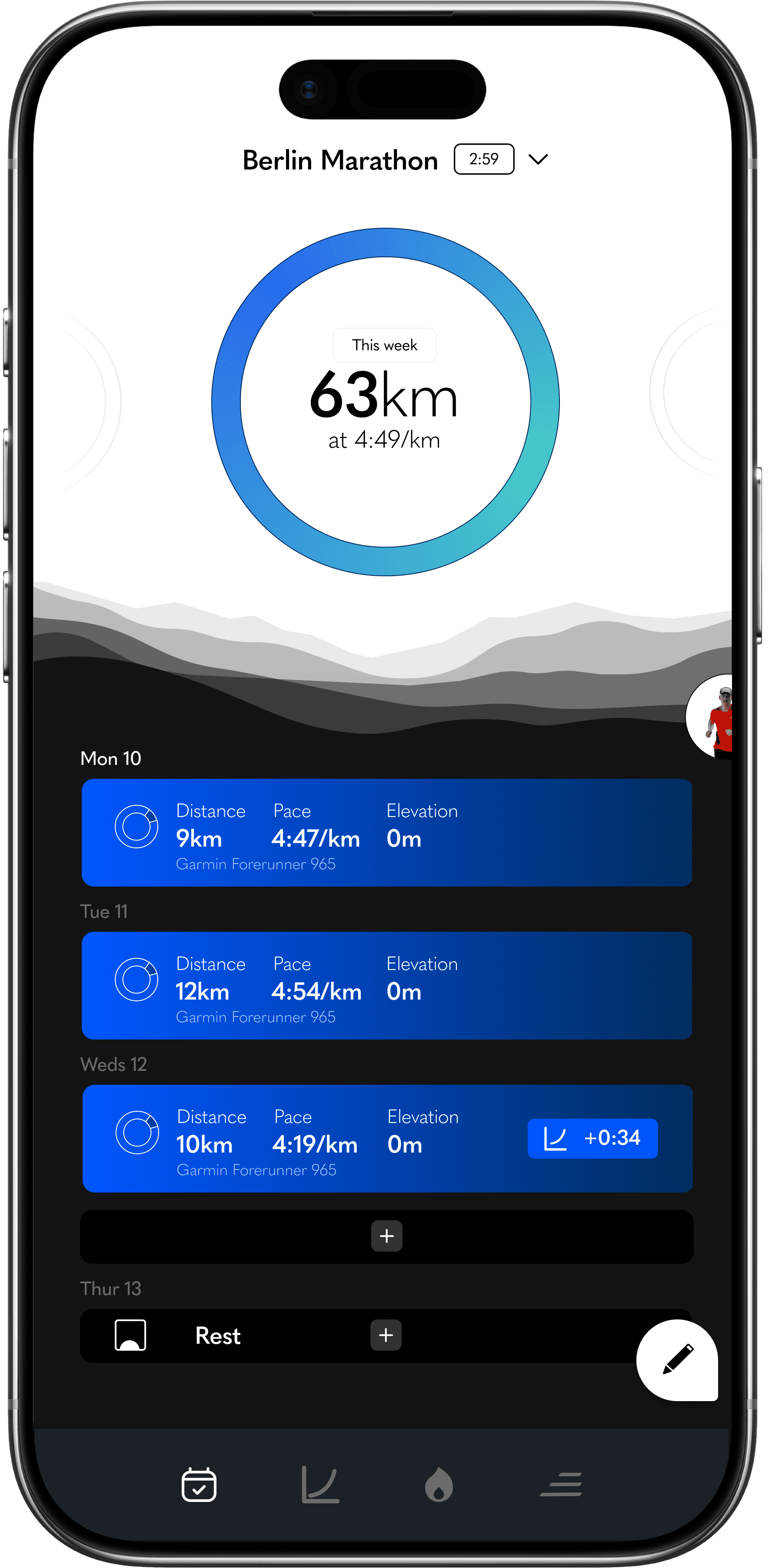
Your 🍩 adjusts based on the running you do

How you run is up to you. Your preferences, how you're feeling, you schedule, your general life stress.

Run harder and you may need less distance.
Run easier and you may need more.
Either way, kaizen is updating the week based on what actually happened.


Plan out your runs for a predictable end of week target.

Daily feedback on how your fitness is progressing

kaizen translates your last few months of training into an accurate view of how your current fitness, taking a big picture view that quietens the noise of individual workouts.


Use this to for:

  • pacing guidance

  • tracking progress


kaizen’s prediction is for a best-case scenario. In practice, that means the realistic upper end of what your current training could support if race-day execution, pacing, and conditions go well.
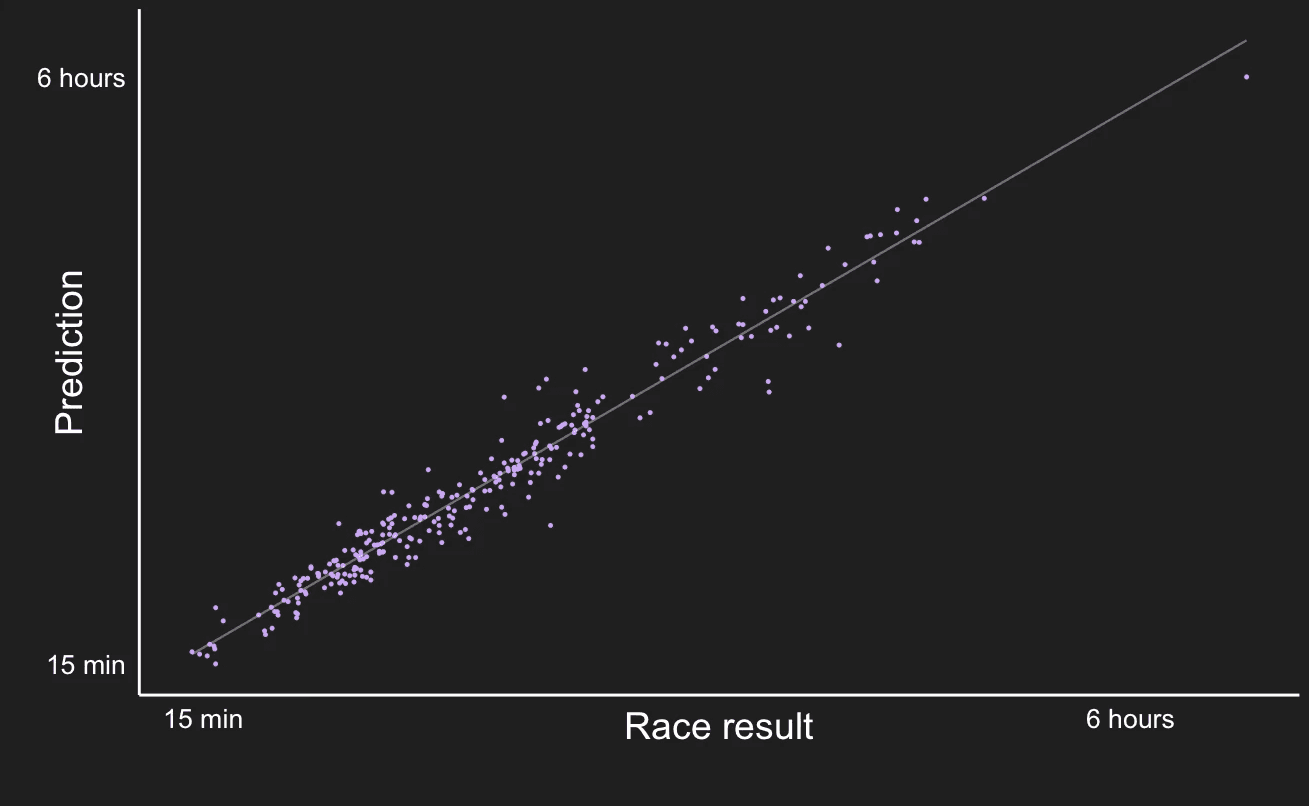
About us metrics graph

For most races Kaizen is able to predict your race pace to within 2sec/km - meaning you will know exactly what speed to run at to achieve the best possible result.

Questions? Answers.

Kaizen's race predictions are accurate for 93% of races to within 5s/km. The predictions are best used as pacing guidance and feedback about how your fitness is progressing.

Kaizen's predictions are for a ‘best case’ scenario. This means that to match (or beat) your race prediction you’ll need to race:

- at maximum effort

- on a flat road

- with good pacing

- in good weather

What sets the kaizen prediction apart?

plus icon

The algorithm accurately predicts distances between 3k - 50k and across a speed range of 2:50 to 7:00min/km. So whether you’re aiming to qualify for the Olympic marathon, or completing your first 5k, kaizen can handle everything you need.

What are the speed and distance limits of the prediction?

plus icon

Because Kaizen is updating the week based on the running you actually did. The visible distance target is a translation of the underlying load goal, so it can move as pace, elevation, and other training context change.

Why did my weekly target change?

plus icon

One missed run does not mean the week is broken. kaizen is designed to keep the bigger picture in view and help you keep moving toward your goal.

If responsible, you can spread the missed load of the remaining days, or alternatively kaizen will distribute it over future weeks to keep you on track.

What if I miss a run?

plus icon

No, kaizen is built around guiding the right amount of work, not forcing everyone into the same rigid session-by-session plan.

This means flexibility in how you want to train. You can choose any training approach under the sun, kaizen will always make sure your overall training load is responsible, and in line with what you need to achieve, week after week.

Do I need to follow exact sessions?

plus icon

No. You can achieve the set training load to improve your race predictions however you like. Whether it's jogging 100% of the time, or mixing it up with more structured training. The important thing is to listen to your body and gain an understanding of what works for you.

The most important thing is to be consistent, so your training should be in service of that need for consistency.

Do I need to polarise my training or include specific interval sessions?

plus icon

Absolutely. A running coach can be really useful to provide guidance from a human standpoint on everything training-wise, including providing you with a tailored training plan.

Kaizen can complement the coach to add a data-driven angle to your training and ensure that the training load you're achieving is in line with your running ambitions.

Can I use kaizen and work with a coach at the same time?

plus icon

Currently, you can train for 5k, 10k, half marathon and marathon races using Kaizen.

In the future, Kaizen will be able to support custom distances from 3k to 50k.

What race distances does kaizen support?

plus icon

Even if you aren't training for a race, you can use Kaizen to continue training with an improve plan. You can pull back or dial up your trianing, depending on whether you want to maintain fitness or max out.

Do I need to have an upcoming race to use kaizen?

plus icon

It means the realistic upper end of what your current training could support under strong race-day conditions and good execution.

What does best-case prediction mean?

plus icon

Because Kaizen is updating the week based on the running you actually did. The visible distance target is a translation of the underlying load goal, so it can move as pace, elevation, and other training context change.

Why did my weekly target change?

plus icon

One missed run does not mean the week is broken. kaizen is designed to keep the bigger picture in view and help you keep moving toward your goal.

If responsible, you can spread the missed load of the remaining days, or alternatively kaizen will distribute it over future weeks to keep you on track.

What if I miss a run?

plus icon

No, kaizen is built around guiding the right amount of work, not forcing everyone into the same rigid session-by-session plan.

This means flexibility in how you want to train. You can choose any training approach under the sun, kaizen will always make sure your overall training load is responsible, and in line with what you need to achieve, week after week.

Do I need to follow exact sessions?

plus icon

No. You can achieve the set training load to improve your race predictions however you like. Whether it's jogging 100% of the time, or mixing it up with more structured training. The important thing is to listen to your body and gain an understanding of what works for you.

The most important thing is to be consistent, so your training should be in service of that need for consistency.

Do I need to polarise my training or include specific interval sessions?

plus icon

Absolutely. A running coach can be really useful to provide guidance from a human standpoint on everything training-wise, including providing you with a tailored training plan.

Kaizen can complement the coach to add a data-driven angle to your training and ensure that the training load you're achieving is in line with your running ambitions.

Can I use kaizen and work with a coach at the same time?

plus icon

Currently, you can train for 5k, 10k, half marathon and marathon races using Kaizen.

In the future, Kaizen will be able to support custom distances from 3k to 50k.

What race distances does kaizen support?

plus icon

Even if you aren't training for a race, you can use Kaizen to continue training with an improve plan. You can pull back or dial up your trianing, depending on whether you want to maintain fitness or max out.

Do I need to have an upcoming race to use kaizen?

plus icon

It means the realistic upper end of what your current training could support under strong race-day conditions and good execution.

What does best-case prediction mean?

plus icon

Because Kaizen is updating the week based on the running you actually did. The visible distance target is a translation of the underlying load goal, so it can move as pace, elevation, and other training context change.

Why did my weekly target change?

plus icon

One missed run does not mean the week is broken. kaizen is designed to keep the bigger picture in view and help you keep moving toward your goal.

If responsible, you can spread the missed load of the remaining days, or alternatively kaizen will distribute it over future weeks to keep you on track.

What if I miss a run?

plus icon

No, kaizen is built around guiding the right amount of work, not forcing everyone into the same rigid session-by-session plan.

This means flexibility in how you want to train. You can choose any training approach under the sun, kaizen will always make sure your overall training load is responsible, and in line with what you need to achieve, week after week.

Do I need to follow exact sessions?

plus icon

No. You can achieve the set training load to improve your race predictions however you like. Whether it's jogging 100% of the time, or mixing it up with more structured training. The important thing is to listen to your body and gain an understanding of what works for you.

The most important thing is to be consistent, so your training should be in service of that need for consistency.

Do I need to polarise my training or include specific interval sessions?

plus icon

Absolutely. A running coach can be really useful to provide guidance from a human standpoint on everything training-wise, including providing you with a tailored training plan.

Kaizen can complement the coach to add a data-driven angle to your training and ensure that the training load you're achieving is in line with your running ambitions.

Can I use kaizen and work with a coach at the same time?

plus icon

Currently, you can train for 5k, 10k, half marathon and marathon races using Kaizen.

In the future, Kaizen will be able to support custom distances from 3k to 50k.

What race distances does kaizen support?

plus icon

Even if you aren't training for a race, you can use Kaizen to continue training with an improve plan. You can pull back or dial up your trianing, depending on whether you want to maintain fitness or max out.

Do I need to have an upcoming race to use kaizen?

plus icon

It means the realistic upper end of what your current training could support under strong race-day conditions and good execution.

What does best-case prediction mean?

plus icon